
QUÉ ESTÁS BUSCANDO
?
You bought a sleep mask to sleep better. But somewhere around 2am, you wake up — and the first thing you notice is that your face is warm.
Not the room. Your face. Specifically, the 6 square inches of skin covered by your sleep mask.
This is not a coincidence. It's physics. And most sleep mask brands have been ignoring it.
The heat problem in sleep masks has three sources, and they almost always work together:
Source 1: Memory foam retains heat. The 3D contour revolution in sleep masks was real — zero eye pressure changed how millions of people sleep. But the material that makes 3D contours possible (memory foam) is also one of the most heat-retentive materials in consumer products. It absorbs body heat and holds it, creating a warm microclimate around your eyes within 20–30 minutes of wear.
Source 2: Silk doesn't breathe as well as the marketing suggests. Silk feels cool to the touch, and it is — initially. But silk's natural temperature regulation comes from its breathability in open air. Under compression, pressed against your face, it behaves differently. It still feels luxurious. It doesn't necessarily stay cool.
Source 3: The gap between "cooling" and "all-night cooling." Most cooling sleep masks on the market use contact cooling — a ceramic plate, a gel insert, or a special fabric that feels cool when you first put it on. Within 15–30 minutes, your body heat has equilibrated with the material. The "cooling" sensation disappears. You're left with a regular sleep mask that made a temporary promise.
The technology that solves this problem has existed in performance textiles for years. It's called PCM — Phase Change Material.
PCM works differently from contact cooling. Instead of feeling cold at the start, it actively absorbs excess heat when your skin temperature rises above a set threshold, and releases it back when your skin cools. It's thermoregulation, not a one-time cooling effect.
The challenge with PCM in bedding has always been cost — you need significant material volume for a comforter to make a difference. But a sleep mask has a surface area of roughly 0.02 square meters. The math changes completely.
The same technology that would add 0.50 to a sleep mask. It's not a premium upgrade — it's a product design decision.
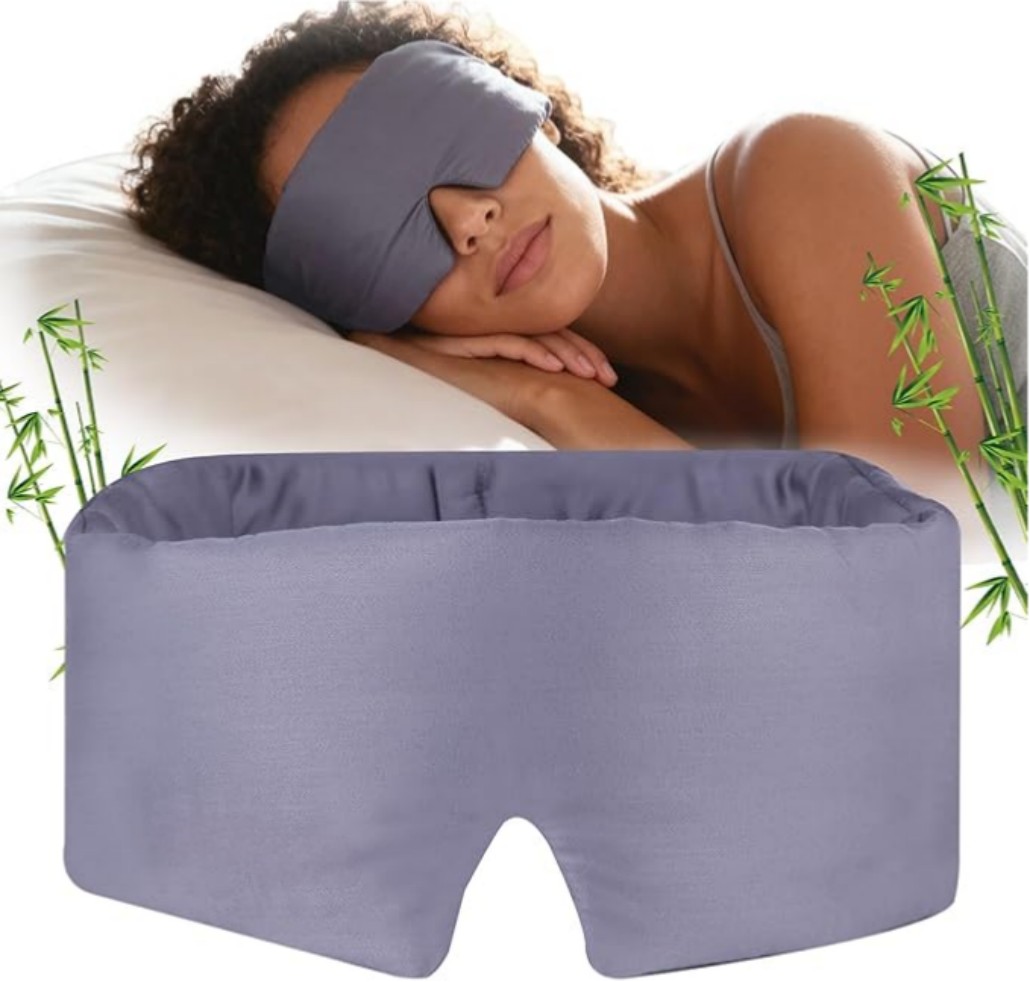
We combined PCM technology with 3D silk construction and a side-sleeper strap to build the first sleep mask that addresses all three heat problems simultaneously:
If you've been waking up warm at 2am, it's not you. It's your mask.
[Explore the PCM Cooling Sleep Mask →] | [Request a Sample →]


 IPv6 network supported.